

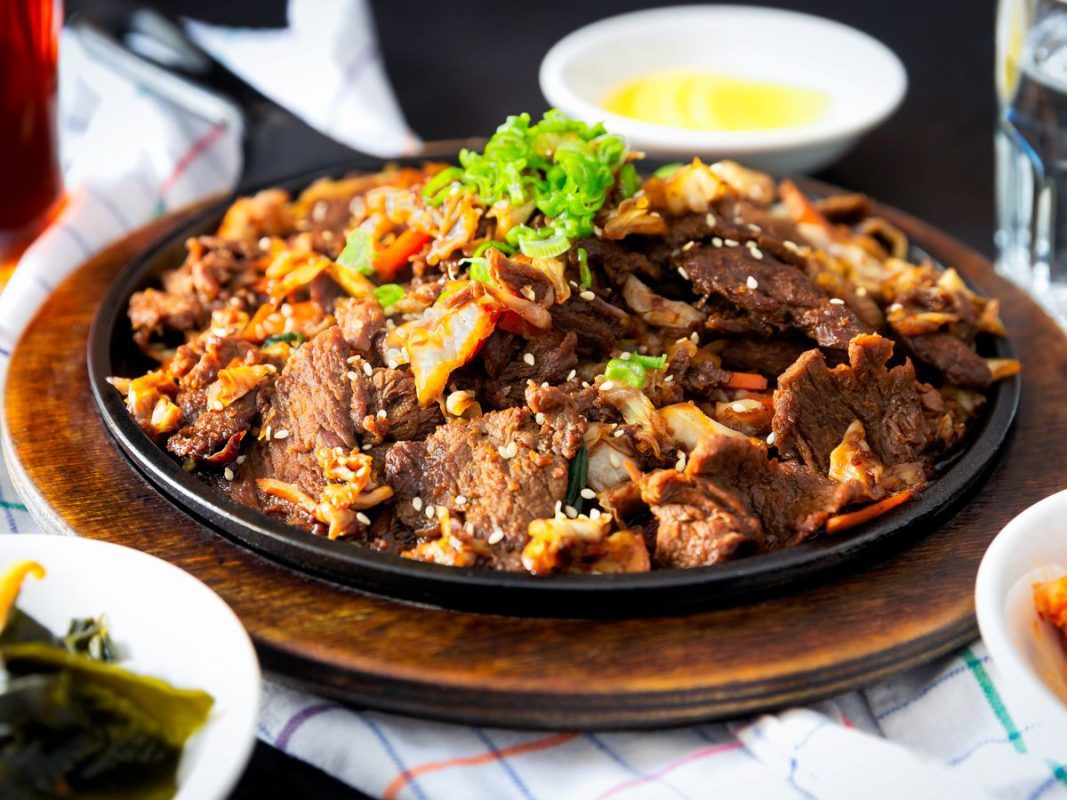

The grated pear in bulgogi isn’t there for flavor — or not primarily. Asian pears contain enzymes that break down protein, which is the same mechanism at work in meat tenderizers, and it’s the real reason bulgogi marinated beef stays tender even from cuts that would otherwise turn chewy on a hot pan. Skip it and use only soy sauce and sugar, and the beef will still taste good, but it won’t have that almost-melting texture that makes bulgogi distinct from a regular marinated steak.
Because of that enzymatic effect, there’s actually a point of diminishing returns on marinating time here — unlike a lot of marinades where “longer is always better,” leaving thinly sliced beef in a pear-based marinade for more than about 24 hours can start to break the texture down too far, turning slightly mushy instead of tender. An hour is the minimum for real flavor penetration; overnight is the sweet spot; a full 48 hours is usually a mistake.
Slicing thinly matters just as much as the marinade. This is traditionally done with the meat partially frozen — about 20-30 minutes in the freezer firms it up enough to get clean, thin slices that would be difficult to achieve with room-temperature beef, which tends to squish and tear under the knife instead of slicing cleanly. If your grocery store sells pre-sliced meat for hot pot or shabu-shabu, that’s already cut to roughly the right thickness and can save you the step entirely.
On the pan: resist the urge to move the beef around constantly. The sugar in the marinade is what creates that caramelized, slightly charred edge, and that only happens if the meat sits still long enough to actually develop contact with the hot surface. Constant stirring just steams it in its own juices instead.
Bulgogi is traditionally a shared, interactive meal — cooked at the table on a grill built into the middle of it, wrapped in lettuce leaves with rice and a dab of ssamjang. You don’t need special equipment to get the flavor right, but if you’re serving it for a group, consider cooking it in the last batch just before people sit down, since it’s noticeably better fresh off the heat than reheated.
Rounding out a Korean BBQ spread: Japchae makes a great make-ahead side, and Korean Fried Chicken is worth adding if you’re feeding a bigger group.
Sweet & Smoky Beef Bulgogi
Ingredients:
Instructions
-
Gather and prep all 9 ingredients listed above before starting the marinade.
-
If the beef isn't pre-sliced, place it in the freezer for 20-30 minutes to firm up, then slice as thinly as possible against the grain.
-
In a bowl, combine the grated pear, soy sauce, brown sugar, sesame oil, garlic, and ginger, stirring until the sugar dissolves.
-
Add the sliced beef to the marinade, tossing well so every piece is coated.
-
Cover and marinate in the fridge for at least 1 hour and up to overnight - avoid going much past 24 hours, since the pear's enzymes can start to break the texture down too far.
-
Heat a large skillet or grill pan over high heat until very hot - a properly hot pan is what gives the caramelized edges.
-
Add the beef in a single layer, working in batches to avoid crowding the pan, which would cause it to steam rather than sear.
-
Let the beef sit undisturbed for about 2 minutes before flipping, so the sugars in the marinade have time to caramelize against the hot surface.
-
Flip and cook for another 1-2 minutes on the second side, until caramelized and slightly charred at the edges.
-
Transfer to a serving plate and repeat with the remaining batches, keeping cooked beef loosely covered to stay warm.
-
Taste and adjust with a touch more soy sauce or a pinch of sugar if needed.
-
Garnish with sliced green onions and toasted sesame seeds just before serving.
Nutrition Facts
Servings 4
- Amount Per Serving
- Calories 360kcal
- % Daily Value *
- Total Fat 20g31%
- Saturated Fat 6g30%
- Cholesterol 95mg32%
- Sodium 680mg29%
- Total Carbohydrate 12g4%
- Dietary Fiber 1g4%
- Sugars 8g
- Protein 30g60%
* Percent Daily Values are based on a 2,000 calorie diet. Your daily value may be higher or lower depending on your calorie needs.
Note
Grated Asian pear naturally tenderizes the beef and adds a subtle sweetness - don't skip it if you can find one. Resist flipping too early - let the first side develop a proper sear before turning, which also makes food release from the pan naturally.Frequently Asked Questions
Can I use a different cut of beef?
Yes, flank steak or skirt steak both work well, just slice thinly against the grain.
Can I cook this on an outdoor grill?
Yes, bulgogi is traditionally grilled - just watch closely since thin slices cook very quickly.
What can I substitute for Asian pear?
A regular pear or even a small amount of grated apple works as a substitute for tenderizing and sweetness.
Can I marinate the beef too long?
Not much longer than 24 hours - the pear's enzymes will continue breaking down the protein and can make the texture mushy rather than tender past that point.
How do I get the beef sliced thin enough?
Partially freeze the beef for 20-30 minutes before slicing - it firms up the meat enough to get clean, thin slices. Pre-sliced meat sold for hot pot works well too.
What's the best way to serve bulgogi?
Wrap it in butter lettuce or perilla leaves with a scoop of rice and a dab of ssamjang, or serve it simply spooned over steamed rice.


