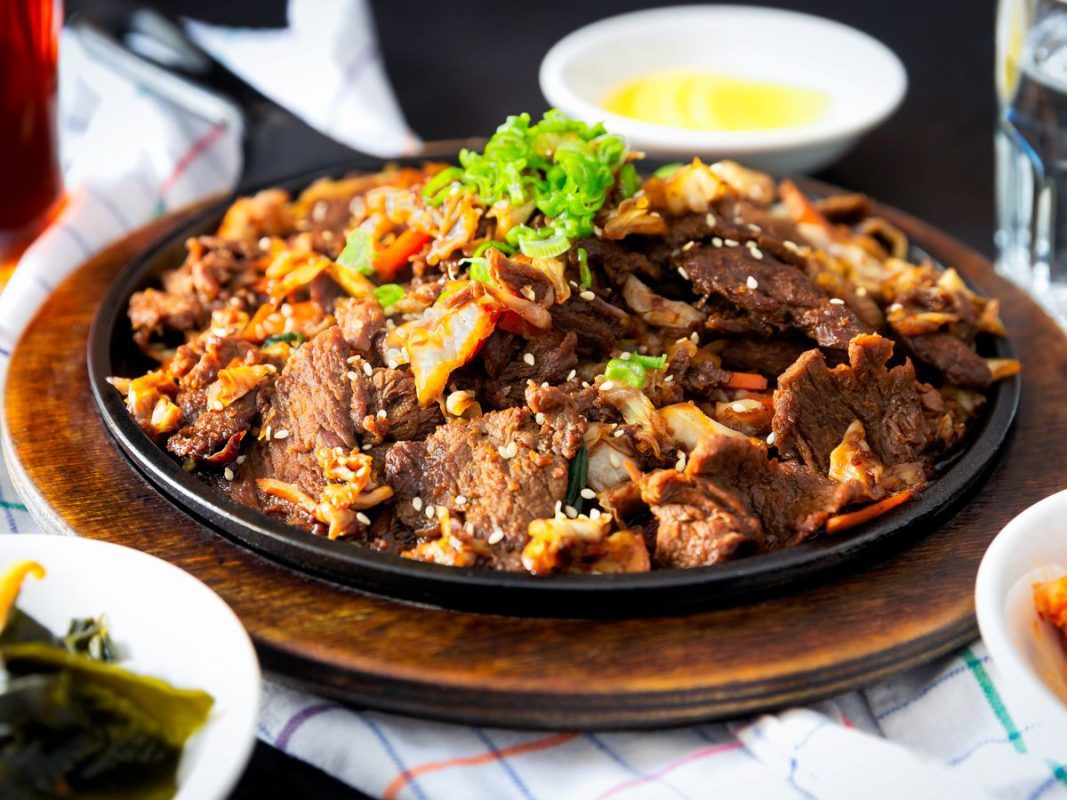
The grated pear in bulgogi isn't there for flavor — or not primarily. Asian pears contain enzymes that break down protein, which is the same mechanism at work in meat tenderizers, and it's the real reason bulgogi marinated beef stays tender even from cuts that would otherwise turn chewy on a hot pan. Skip it and use only soy sauce and sugar, and the beef will still taste good, but it won't have that almost-melting texture that makes bulgogi distinct from a regular marinated steak.
Because of that enzymatic effect, there's actually a point of diminishing returns on marinating time here — unlike a lot of marinades where "longer is always better," leaving thinly sliced beef in a pear-based marinade for more than about 24 hours can start to break the texture down too far, turning slightly mushy instead of tender. An hour is the minimum for real flavor penetration; overnight is the sweet spot; a full 48 hours is usually a mistake.
Slicing thinly matters just as much as the marinade. This is traditionally done with the meat partially frozen — about 20-30 minutes in the freezer firms it up enough to get clean, thin slices that would be difficult to achieve with room-temperature beef, which tends to squish and tear under the knife instead of slicing cleanly. If your grocery store sells pre-sliced meat for hot pot or shabu-shabu, that's already cut to roughly the right thickness and can save you the step entirely.
On the pan: resist the urge to move the beef around constantly. The sugar in the marinade is what creates that caramelized, slightly charred edge, and that only happens if the meat sits still long enough to actually develop contact with the hot surface. Constant stirring just steams it in its own juices instead.
Bulgogi is traditionally a shared, interactive meal — cooked at the table on a grill built into the middle of it, wrapped in lettuce leaves with rice and a dab of ssamjang. You don't need special equipment to get the flavor right, but if you're serving it for a group, consider cooking it in the last batch just before people sit down, since it's noticeably better fresh off the heat than reheated.
Rounding out a Korean BBQ spread: Japchae makes a great make-ahead side, and Korean Fried Chicken is worth adding if you're feeding a bigger group.